






95.4% of women reported effective medical cannabis treatment: Releaf survey findings for International Women’s Day 2026
12 min read
Sam North


While the legal prescribing of medical cannabis in the UK has gone through what can only be described as a rather remarkable expansion in the past 24 months or so, robust, large-scale datasets on how patients experience treatment in practice have remained relatively scarce.
That is, until late last year.
In November 2025, Releaf commissioned the largest UK medical cannabis patient survey ever conducted, with 1,669 responses.
Each Releaf payient that chose to take part in our landmark survey was asked to answer a broad range of questions, covering how effective they found medical cannabis to be, how quickly they noticed the treatment helping, if they found that their quality of life had improved since starting with Releaf, as well as if they had experienced any side effects or stigma, and practical considerations such as confidence taking their legally prescribed medication outside the home or while travelling.
Contents
With International Women’s Day taking place today and shining a welcome spotlight on women’s health, new patient data offers a rare look at how treatment is being experienced in practice.
While only 65 of the respondents reported receiving Releaf medical cannabis treatment for women’s health conditions (including endometriosis, menopause symptoms, severe menstrual pain, PMDD, and related hormonal health concerns), that number still represents the largest patient-reported dataset of its kind currently available in the UK.
And the numbers paint quite a clear picture, even within this relatively small cohort. Most of the women reported high levels of treatment effectiveness, rapid onset of benefit, and widespread improvements in quality of life.
Let’s grab that data and see what it really says…
Key findings from Releaf’s UK medical cannabis survey on women’s health
|
Finding |
Result |
Respondents |
|
Reported treatment was effective ('moderately effective', 'very effective', or 'extremely effective') |
95.4% |
62/65 |
|
Reported treatment was 'very effective' or 'extremely effective' |
78.5% |
51/65 |
|
Reported improvement in quality of life ('improved slightly' or 'improved significantly') |
98.5% |
64/65 |
|
Reported 'improved significantly' in quality of life |
70.8% |
46/65 |
|
Reported noticing benefits within the first week or sooner ('from first dose', 'within first day', or 'within first week') |
75.4% |
49/65 |
|
Reported 'no' side effects |
83.1% |
54/65 |
|
Reported experiencing stigma |
24.6% |
16/65 |
|
Felt 'completely confident' or 'somewhat confident' using medication outside the home |
72.4% |
47/65 |
|
Reported 'improved significantly' in ability to perform daily tasks |
56.9% |
37/65 |
|
Reported 'improved significantly' in ability to work or study |
43.1% |
28/65 |
Which women’s health conditions and concerns were most commonly reported in this cohort?
Conditions in the survey were captured through a combination of structured selections and free-text diagnosis fields, allowing respondents to indicate both their primary condition and any additional health concerns relevant to their treatment.
Within the medical cannabis treatment for women’s health conditions cohort, a handful of women's specific health conditions surfaced again and again in respondents answers. Conditions such as endometriosis, menopause and perimenopause symptoms, severe menstrual pain, and PMDD, alongside other related concerns.
These conditions represent some of the most commonly discussed areas of women’s health in the UK, particularly where chronic pain and hormonal symptoms intersect, both of which are increasingly becoming major parts of the conversation around clinically prescribed medical cannabis.


Treatment efficacy and tolerability were extremely high, with 95.4% reporting that it was effective
Treatment efficacy, or how well the prescribed medical cannabis treatment options worked, was the first outcome that we asked our patients to evaluate in the survey.
Across the entire women’s health cohort, the answers were extremely positive.
When answers of 'moderately effective', 'very effective', and 'extremely effective' were combined, 95.4% of respondents reported that treatment was effective (62/65).
The distribution of these responses also landed heavily towards the highest categories:
-
33 respondents (50.8%) reported treatment was 'very effective'
-
18 respondents (27.7%) selected 'extremely effective'.
-
11 respondents (16.9%) described treatment as 'moderately effective'.
Only 2 of the 65 women in this group reported their Releaf treatment had, so far, been 'slightly effective', and even more notably, not one reported that their treatment had no effect at all.


Quality of life improved for 98.5% of respondents prescribed medical cannabis for women’s health needs
Encouragingly, the same pattern of positive signs was mirrored when it came to improvements in quality of life.
A somewhat amazingly high level of respondents (98.5%, or 64 out of 65) reported that their quality of life had improved after beginning treatment. This included responses of 'improved slightly' and 'improved significantly', showing that, when medical cannabis is prescribed responsibly and with ongoing clinical guidance for women’s health needs, the overwhelming majority of patients report noticeable changes to their overall well-being.
-
46 respondents (70.8%) reported their quality of life had 'improved significantly'
-
18 respondents (27.7%) said it had 'improved slightly'
Only one respondent (1.5%) reported being 'unsure' whether their quality of life had changed, with none of the women reporting that their quality of life had worsened following treatment.
It is these types of consistent outcomes that have secured our position as the most trusted medical cannabis clinic in the UK.

Reported benefits appeared early, with 96.9% of women’s health respondents feeling noticeable health improvements within the first month
How quickly a new treatment option may bring symptom relief is usually one of the first things most patients want to get their heads around. Again, the positive results continue to roll in here, with 96.9% of respondents reported noticing some level of improvement within the first month (63/65).
And, for many, treatment efficacy was felt from the very first dose, within the first day, or week:
Most respondents reported early perceived benefits
Breaking the responses down further shows how quickly improvements were reported:
-
19 respondents (29.2%) reported noticing benefits 'from the first dose'
-
10 respondents (15.4%) reported benefits 'within the first day'
-
20 respondents (30.8%) reported benefits 'within the first week'
-
12 respondents (18.5%) reported benefits 'within the first month'
-
2 respondents (3.1%) reported benefits taking 'longer than one month'

How did treatment affect daily tasks and ability to work or study?
Beyond overall quality of life, we also asked our patients to be open with us about how their Releaf prescription had affected other, more quantifiable aspects of their lives. Questions like “Could they manage everyday tasks more easily? Had their ability to work or study changed?”
Queries along these lines often sit at the very heart of public conversations around cannabis, medically prescribed or otherwise. For far too long, the assumption has mostly been that cannabis, in all its forms, undermines productivity and/or concentration.
So, what does the data show? Well, almost the exact opposite…
When answers of 'improved significantly' and 'improved slightly' were combined, 84.6% of respondents reported some level of improvement in their ability to complete daily tasks (55/65). Breaking those responses down further:
-
More than half (37 respondents, or 56.9%) reported their ability to complete daily tasks had 'improved significantly'
-
18 respondents (27.7%) reported their ability had 'improved slightly'
-
Only 7 respondents (10.8%) reported 'no change'
A similar pattern appeared when respondents were asked about their ability to work or study.
In total, 78.5% of respondents reported some level of improvement in their ability to work or study (51/65):
-
Almost half, or 28 respondents (43.1%), reported their ability to work or study had 'improved significantly'
-
23 respondents (35.4%) reported it had 'improved slightly'
-
12 respondents (18.5%) reported 'no change'


Most respondents reported no side effects, with 83.1% experiencing none
Side effects were of little concern, with only 16.9% of respondents (11/65) reporting any side effects at all.
The patients who reported side effects were also asked how their concerns were handled by Releaf’s world-class clinical team. Most reported that their specialist suggested adjustments such as dose or administration changes, switching up the medical cannabis treatment option prescribed, and follow-up guidance helped lessen these effects.
But what side effects did that small group report?
-
Drowsiness or tiredness: 5 respondents (7.7%)
-
Anxiety or paranoia: 3 respondents (4.6%)
-
Dizziness: 2 respondents (3.1%)
-
Feeling 'high' or intoxicated: 2 respondents (3.1%)
-
Gastrointestinal upset: 2 respondents (3.1%)
-
Nausea or vomiting: 1 respondent (1.5%)
-
Dry mouth or dry eyes: 1 respondent (1.5%)
How often did women report stigma related to prescribed medical cannabis?
In the words of Bob Dylan, “The times, they are a changin”, but social attitudes rarely shift fully and in line with legalsative changes, especially in such a short period of time. For an unfortunately large subsection of this cohort, stigma surrounding cannabis still forms part of the broader experience of treatment.
Almost one in four (24.6% of respondents, or 16/65) did report that they had experienced a certain level of stigma due directly to their decision to pursue a medical cannabis prescription.
Education and updated policing guidance are helping reshape understanding of prescribed medical cannabis
As awareness of regulated treatment grows, guidance and education around prescribed medical cannabis are also evolving. Releaf’s Chief Legal and Compliance Officer, Rupa Shah, has been working directly with UK police forces to improve understanding of how legitimate prescriptions work in practice, delivering educational sessions in partnership with Glass Pharms®. These workshops focus on recognising valid prescriptions, pharmacy packaging, and how patient documentation can be checked without infringing on their legal rights or overreaching.
In early 2026, the National Police Chiefs’ Council approved updated guidance reinforcing that prescribed patients should be treated as “patients first, suspects second”, helping clarify how checks and verification should be handled in real-world situations


How confident did women feel taking their prescribed medication outside the home and when travelling?
Tying directly into the impact of stigma surrounding cannabis, even when has been legally prescribed, is how comfortable women felt taking their medication outside their residence, whether that just be for short trips locally or further afield.
While a combined 52.4% reported feeling 'completely confident' (17 respondents/26.2%) or 'somewhat confident' (30 respondents/46.2%) more than a quarter felt either uncomfortable or worried' (11 respondents/16.9%) or that they 'do not use outside the home' (7 respondent/10.8%)
Travel responses reflected a similarly mixed picture:
-
23 respondents (35.4%) reported travelling within the UK with their medication
-
7 respondents (10.8%) reported travelling both within the UK and internationally
-
1 respondent (1.5%) reported travelling internationally only
-
13 respondents (20.0%) had not yet travelled but planned to
-
7 respondents (10.8%) had travelled but chosen not to take their medication
-
9 respondents (13.8%) said they were unsure about travelling with their medication
-
5 respondents (7.7%) said they would not take their medication when travelling
What practical support does Releaf provide for patients outside the clinic?
We understand that choosing to try medical cannabis can be uncomfortable for some patients, let alone the somewhat daunting idea of having to medicate outside the home. That is precisely why we offer all Releaf patients access to a range of practical support tools designed to reduce uncertainty when carrying or administering your prescribed medication.
-
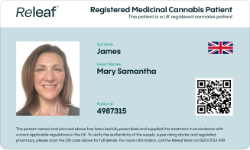
Free medical cannabis card: This card has been designed in support with the authorities to help you confirm your status as a UK medical cannabis patient, and can support verification if questioned in public or by authorities.
-
Free medical cannabis travel certificates: Available to all Releaf patients on request. Printed certificates typically arrive within 2 to 5 working days, while digital copies are usually available within around 3 hours.
-
Releaf Protect: A Releaf+ member benefit that provides access to an independent legal helpline offering guidance on personal situations related to a patient’s lawful prescription, including travel or interactions with authorities. The service provides guidance only and does not offer legal representation or guaranteed outcomes, and is available to Releaf+ members 30 days after they activate their membership.
What do these findings suggest about medical cannabis for women’s health in the UK?
Quite a lot. Not only that the responses regarding medical cannabis for women's health needs suggest that it may be able to play a very meaningful role in helping some women manage some symptoms relating to endometriosis, menopause, perimenopausal, and other women’s health needs, but how those benefits can extend beyond symptom control alone.
For the majority of the respondents, quality of life improved, as did their day to day functioning, and the ability to manage work, study, and daily routines.
If you are interested in learning more in terms of specific women's health issues, head to:
And if you are considering treatment yourself, or you are just curious about your potential eligibility for UK medical cannabis treatment, head straight to our medical cannabis eligibility checker. It is free, takes less than 20 seconds to complete, and will give you a clearer idea of your potential eligibility for treatment in the UK.
Releaf - Let’s rethink healthcare
Share article
Did you like this article?
It is important to seek medical advice before starting any new treatments. The patient advisors at Releaf are available to provide expert advice and support. Alternatively, click here to book a consultation with one of our specialist doctors.

Elevate your wellness with medical cannabis
Get comprehensive care, convenience, and confidence with an all-in-one treatment plan.
Am I eligible?Authors

Sam North, a seasoned writer with over five years' experience and expertise in medicinal cannabis, brings clarity to complex concepts, focusing on education and informed use.
Editorial Policy
All of our articles are written by medical cannabis experts, guided by strict sourcing guidelines, and reference peer-reviewed studies and credible academic research. Our expert clinical team and compliance specialists provide valuable insights to ensure accuracy when required. Learn more in our editorial policy.
Need more help?
Blog Categories
Further reading

Women’s History Month: Celebrating women’s contributions to medicine and science
Women’s History Month takes place every March, offering an opportunity to celebrate the important contributions of women to societies around the world. From scientific discoveries and life-changing inventions to driving social change, women have always played a vital role in the betterment of society. However, their achievements have so often been unrecognised and uncredited. So, in honour of Women’s History Month, we’re celebrating women’s contributions to medicine and science. **

95.4% of women reported effective medical cannabis treatment: Releaf survey findings for International Women’s Day 2026
In November 2025, Releaf commissioned the largest UK medical cannabis patient survey ever conducted (1,669 responses). This cohort analysis examines women treated for conditions such as endometriosis, menopause symptoms, severe period pain, and PMDD, covering reported treatment effectiveness, speed of perceived benefit, quality of life changes, daily functioning, side effects, stigma, and confidence using prescribed medication in public and when travelling.

How UK medical cannabis delivery works (and why delays sometimes happen) in 2026
Medical cannabis delivery in the UK follows strict legal safeguards. Most prescriptions arrive within 2 to 5 working days, but compliance rules and courier regulations can occasionally extend timelines. Here’s how the process works, why licensed couriers are required, and what happens if a delivery is missed.