


Chronic Pain




Rheumatoid arthritis medical cannabis (THC) treatment
Rheumatoid arthritis is a long-term condition that can cause pain, swelling or stiffness in the joints, as well as secondary symptoms like fatigue and sleep disruption. If conventional treatments haven’t provided adequate relief, medical cannabis may be considered as part of your wider management plan.
Releaf is a CQC-regulated clinic that can connect you with a world-class clinical team that can assess whether prescribed medical cannabis may help to alleviate your rheumatoid arthritis symptoms.
18 million
1 in 3
people with rheumatoid arthritis stop working within 2 years of its onset
Symptoms
Early stages typically target the small joints
Firm swellings (called rheumatoid nodules)
Joint pain that throbs or aches
Low-grade fever
Morning stiffness that lasts longer than 30 minutes
Poor appetite
Red skin over the affected joint
Sleep disruption
Symptoms usually affect the same joints on both sides of the body
Tiredness and fatigue
Weight loss
If you’re experiencing any of these symptoms, it’s important to seek tailored advice from a medical professional.
Treatment options:
Rheumatoid arthritis can affect everyone differently, but most patients will typically experience a combination of joint-related and whole-body symptoms. These include:
Biologic treatments, such as adalimumab, etanercept or tocilizumab
Corticosteroids
Dietary changes
Disease-modifying anti-rheumatic drugs (DMARDs), such as methotrexate
JAK inhibitors, such as baricitinib or tofacitinib
Non-steroidal anti-inflammatory drugs (NSAIDs)
Painkillers
Physiotherapy and occupational therapy
Prescribed medical cannabis treatment
Surgery (in severe cases)
Join our growing community of over 240,000 people
Whether you’re new to cannabis-based medicines, switching from another medical cannabis clinic, or self-medicating, we’ll put you back in control of your health.

Condition Arthritis
Subscriber 2 years

Condition Peripheral Neuropathy
Subscriber 2 years

Condition Anxiety & Depression
Subscriber 2 years
Condition Depression
Subscriber 2 years

Condition Chronic Pain
Subscriber 3 years

Condition Restless Legs Syndrome
Subscriber 2 years
Condition Insomnia
Subscriber 2 years

Condition Depression
Subscriber 2 years

Condition CRPS
Subscriber 2 years

Condition Adjunctive Cancer Care
Subscriber 2 years

Condition Ehlers-Danlos Syndrome
Subscriber 2 years

Condition Insomnia & Chronic Pain
Subscriber 2 years

Condition ADHD
Subscriber 2 years

Condition Endometriosis
Subscriber 2 years

Condition Chronic Pain
Subscriber 2 years

Condition Low Back Pain
Subscriber 2 years

Condition ADHD
Subscriber 2 years

Condition Anxiety & ADHD
Subscriber 2 years

Condition Chronic Pain
Subscriber 2 years

Condition Anxiety & Depression
Subscriber 2 years

Condition Chronic Pain
Subscriber 2 years

Condition Endometriosis
Subscriber 2 years

Condition PTSD
Subscriber 2 years

Condition Fibromyalgia
Subscriber 2 years
A word from our specialist
“Rheumatoid arthritis can have a real impact on everyday life, affecting everything from your ability to sleep to enjoying the things you love to do.
Conventional treatments may be highly effective at targeting the underlying cause of rheumatoid arthritis, but they don’t always bring relief from secondary symptoms like pain and sleep disturbances. This is an area where I will often hear patients discussing the impact that taking prescribed medical cannabis has made to their day-to-day life.”

Dr Sue Clenton
Medical Director

Articles on Rheumatoid arthritis


10. 12. 2025
Decoding Cannabis: what a recent scoping review reveals about cannabis for rheumatoid arthritis
A recent scoping review has dug into how cannabinoids interact with inflammation, joint tissue, and pain signalling in rheumatoid arthritis. This article breaks down what the researchers found, how THC and CBD influence key inflammatory pathways, and what these insights may mean for people living with arthritis in the UK. We also look at how this evidence compares with current patient experiences.
10. 12. 2025
17. 09. 2025
Living with Rheumatoid Arthritis: Treatment options and patient support
This week marks Rheumatoid Arthritis Awareness Week, and in honour of the occasion, we’re taking a look at the impact of this common disease and how different treatments - including medical cannabis - could help patients to manage their symptoms.
17. 09. 2025
08. 03. 2024
A Rheumatologist’s perspective: Q&A on medical cannabis and fibromyalgia
Hello, and welcome to the first of many conversations with Releaf’s specialist doctors. This week we’re speaking to our expert Rheumatologist, Dr Hanna Gul, about the benefits medical cannabis may be able to offer to patients who are struggling with fibromyalgia.
08. 03. 2024
04. 09. 2023
Finding the optimal CBD dose for rheumatoid arthritis
Rheumatoid arthritis is a chronic autoimmune disease that affects the joints, causing severe pain, swelling, and mobility issues. Although it can manifest in any articulated joint, it most commonly impacts knees, hands, feet, and wrists.
04. 09. 2023
Can medical cannabis treatments help the symptoms of rheumatoid arthritis?
Rheumatoid arthritis is a long-term autoimmune condition that causes joint pain, swelling and stiffness. Medical cannabis treatments may help eligible patients to manage certain symptoms, such as pain and sleep disruption.
What is rheumatoid arthritis?
Rheumatoid arthritis is a chronic autoimmune condition that causes the immune system to attack the lining of the joints.
It’s also the most common form of inflammatory arthritis, estimated to affect approximately 1% of the UK population and 18 million people worldwide.
Living with rheumatoid arthritis can cause inflammation, pain, swelling and stiffness in the joints. Over time, this may eventually result in damaged cartilage, bone, tendons and ligaments within the joint itself, making it more difficult to perform daily activities.
However, rheumatoid arthritis can impact a lot more than just the joints.
Some patients experience various other associated secondary symptoms as well, including fatigue, brain fog, low mood, poor sleep, weight loss or inflammation in other parts of the body.

What causes rheumatoid arthritis?
While the exact cause of rheumatoid arthritis remains unknown, it’s widely understood to result from a combination of genetics, environmental triggers and hormonal factors.
You may also be more likely to develop the condition if you:
-
are female (women are 2 to 4 times more likely to develop rheumatoid arthritis than men)
-
have a family history of rheumatoid arthritis
-
are a smoker or have smoked in the past
-
are aged between 30 and 50
-
have certain immune or genetic risk factors
There’s still no cure for rheumatoid arthritis, but having the right treatment plan in place can help to manage your symptoms and slow the progression of joint damage over time.
What symptoms does rheumatoid arthritis cause?
Rheumatoid arthritis can affect everyone differently, but most patients will typically experience a combination of joint-related and whole-body symptoms.
Some of the most common joint-related symptoms include:
-
Chronic joint pain and swelling
-
Morning stiffness that lasts 30 minutes or more
-
Tender, warm or swollen joints
-
Reduced range of movement in the affected joints
Other associated symptoms can include:
-
Persistent fatigue and low energy
-
A high temperature and a general feeling of being unwell
-
Sweating
-
Loss of appetite or unintentional weight loss
-
Sleep disruption caused by pain and inflammation
-
Brain fog and difficulty concentrating
-
Anxiety linked to long-term illness
-
Low mood or depression related to chronic pain
Symptoms of rheumatoid arthritis will often come and go, and are commonly referred to as flare-ups. This is where the joint pain, swelling and other associated symptoms suddenly become significantly worse for days or weeks at a time.
That said, the condition affects everyone differently. While some patients may experience relatively few symptoms in between flare-ups, others may live with a chronic, ongoing level of discomfort.
Left untreated, rheumatoid arthritis can also lead to permanent joint damage, which is why it’s so important to get diagnosed as soon as possible.
What is the difference between rheumatoid arthritis and osteoarthritis?
While both rheumatoid arthritis and osteoarthritis are both forms of arthritis that impact the joints, they're two very different conditions.
Rheumatoid arthritis is an autoimmune condition where the immune system mistakenly attacks the lining of the joints. Osteoarthritis, on the other hand, is a degenerative joint disease often caused by the gradual breakdown of cartilage.
Rheumatoid arthritis also tends to affect the same joints on both sides of the body and is typically linked to symptoms like prolonged morning stiffness, fatigue and flare-ups.
Osteoarthritis develops more gradually in specific joints over time and is commonly associated with things like ageing or injuring the joint.

What are the conventional treatments for rheumatoid arthritis?
Conventional rheumatoid arthritis treatments generally focus on reducing inflammation and trying to protect your joints from becoming further damaged.
Here is an overview of the most commonly recommended treatment options:
|
Type of treatment |
Clinical context |
|
Disease-modifying anti-rheumatic drugs (DMARDs), such as methotrexate |
First-line treatment designed to ease the symptoms of rheumatoid arthritis and slow down its progression |
|
Biologics, such as adalimumab, etanercept or tocilizumab |
An injection that’s often taken in combination with DMARDs to prevent particular chemicals in the blood from activating the immune system |
|
JAK inhibitors, such as tofacitinib |
An oral medication recommended for patients with moderate to severe rheumatoid arthritis to help block enzymes involved in the inflammatory response |
|
Corticosteroids |
A short-term option to help manage flare-ups and reduce inflammation |
|
Painkillers, such as ibuprofen |
Designed to deliver short-term pain relief, but won’t slow down the disease progression |
|
Physiotherapy and occupational therapy |
Recommended to support joint mobility, strength and day-to-day functioning |
|
Prescribed medical cannabis |
A clinician-led option that may help eligible patients manage associated symptoms, including fatigue and sleep disruption |
While these treatments help many patients to manage their symptoms, not everyone responds to them in the same way.
This is why some patients decide to explore alternative options, such as prescribed medical cannabis, to help manage symptoms that haven’t fully responded to standard care.
Have a look at our patient stories to discover which treatments our arthritis patients have successfully used to help alleviate their symptoms.
Can medical cannabis help with rheumatoid arthritis symptoms?
For some eligible patients, prescribed medical cannabis may help to manage certain symptoms of rheumatoid arthritis.
While medical cannabis can’t treat the underlying cause of the condition, it may help to manage several of the secondary symptoms associated with the condition, such as chronic pain, sleep disruption and persistent fatigue.
This is largely due to the two main active ingredients it contains: tetrahydrocannabinol (THC) and cannabidiol (CBD).
These compounds interact with the body’s endocannabinoid system, a complex cell signalling network that regulates various physiological and cognitive processes, including sleep, mood, appetite and memory.
-
THC is psychoactive and acts on CB1 receptors in the nervous system to potentially help with pain perception, sleep and relaxation
-
CBD is non-intoxicating and works largely on CB2 receptors found within the immune system, which play a key role in inflammation. It may also slow the breakdown of endocannabinoids, helping them stay active for longer and allowing the body more time to regulate its inflammatory response.
If you’re eligible to receive prescribed medical cannabis for rheumatoid arthritis, your consultant will determine a ratio of THC and CBD to take that’s based on your symptoms, medical history and previous treatments.
How does the endocannabinoid system interact with rheumatoid arthritis?
The endocannabinoid system (ECS) is a complex cell-signalling network involved in a wide variety of bodily processes.
From regulating pain and inflammation to impacting our mood and ability to get to sleep, the ECS is an important system characterised by two main receptors:
-
CB1 receptors, which are mainly found in the brain and nervous system and are involved in pain signalling
-
CB2 receptors, which are found largely on immune cells and within joint tissues, where they help regulate inflammation
So, how does the ECS relate to rheumatoid arthritis?
This has led researchers to look at the mechanisms of cannabinoids in more detail, investigating how they interact with the immune system and the impact that medical cannabis may have on reducing inflammation.
While more clinical trials are still needed to fully understand this relationship, it’s certainly an area worth keeping an eye on.
What does the research say about cannabis for rheumatoid arthritis?
Research into the application of medical cannabis treatments for rheumatoid arthritis is still a very much developing area of interest.
That said, several studies have already established its potential in supporting pain management, reducing inflammation and improving overall quality of life.
Here’s a quick overview of some of the most relevant findings to have been published over recent years:
|
Name of study |
Year of publication |
Results |
|
2006 |
This early randomised controlled trial found that a cannabis-based medicine led to improvements in pain on movement, pain at rest and sleep quality compared to placebo in patients with rheumatoid arthritis. |
|
|
Transdermal cannabidiol reduces inflammation and pain-related behaviours in a rat model of arthritis |
2016 |
This preclinical study found that transdermal CBD reduced joint swelling, pain-related behaviours and inflammatory markers in a rat model of arthritis. While it wasn’t a rheumatoid arthritis-specific human study, it supports the idea that CBD may have anti-inflammatory and pain-modulating effects. |
|
Cannabis and Cannabinoids in the Treatment of Rheumatic Diseases |
2020 |
This review found that cannabinoids have shown potential therapeutic effects in rheumatoid arthritis by attenuating and inhibiting cytokine production in synovial tissue obtained from patients. |
|
2023 |
This review highlighted strong preclinical evidence for the anti-inflammatory and pain-relieving effects of cannabinoids, but flagged that human clinical evidence in rheumatoid arthritis remains limited. |
|
|
2024 |
This review found that cannabis-based treatments may help with chronic pain across several rheumatic conditions, including rheumatoid arthritis, with mostly minor side effects reported. |
|
|
2025 |
This UK registry study found that cannabis-based medicines were associated with improvements in pain, sleep and quality of life for patients with inflammatory arthritis, including rheumatoid arthritis. |
While these studies show a lot of promise, it’s important to note that clinical evidence related to rheumatoid arthritis and medical cannabis remains fairly limited.
If you'd like to learn more, our in-depth guide on medical cannabis and rheumatoid arthritis explores the research, administration methods and dosage considerations in more detail.
As always, you should speak to a medical professional before considering medical cannabis as a potential treatment option.

Am I eligible for medical cannabis for rheumatoid arthritis at Releaf?
Rheumatoid arthritis is an eligible condition for medical cannabis treatment in the UK, as long as it is prescribed to you via a CQC-regulated private clinic like us at Releaf.
That said, your eligibility will depend on several important factors.
For example, you’re likely to only be eligible for medical cannabis for rheumatoid arthritis if you have:
-
A confirmed diagnosis from a doctor or medical specialist
-
Ongoing symptoms of the condition
-
Already tried at least two conventional treatments that have failed to provide adequate relief
How does the process work?
At Releaf, our world-class clinical team of specialists will assess your eligibility based on your medical history, current symptoms and any previous treatments you’ve used.
If you qualify for an initial consultation with us, your consultant will review:
-
your diagnosis
-
your current symptoms
-
any medicines you currently take
-
any treatments you have already tried
They will also ask you various questions about how the symptoms you’re experiencing are affecting your day-to-day life and what your ideal treatment goals are.
If prescribed medical cannabis is deemed appropriate to your needs, you will then be provided with a tailored treatment plan to help alleviate your symptoms.
As a Releaf patient, you’ll also receive access to expert follow-up support, regular consultations and various patient-focused resources, such as Releaf Protect and travel certification.
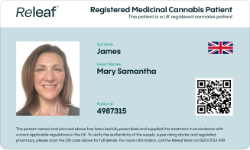
It gets even better if you’re a Releaf+ member too, as you’ll also get free prescriptions, free delivery, unlimited consultations and your very own medical cannabis card.
Use our medical cannabis eligibility checker to find out whether you’re eligible. It’s free, only takes 20 seconds, and may be your first step to finding effective relief.
Frequently asked questions about medical cannabis for rheumatoid arthritis
If you have more questions about medical cannabis and rheumatoid arthritis, we are here to help. Here are some of the questions our consultants are asked about most often.
Can medical cannabis replace the need for other rheumatoid arthritis medications, like methotrexate or biologics?
No, prescribed medical cannabis is not a replacement for other rheumatoid arthritis medications, like methotrexate, biologics or any other disease-modifying treatments.
These medications are designed to slow the underlying autoimmune response in rheumatoid arthritis.
Medical cannabis works very differently, and may be prescribed alongside these conventional treatments to help manage persistent symptoms like pain, sleep disruption and fatigue. But, importantly, it does not treat the cause of rheumatoid arthritis.
Can medical cannabis help with symptoms like rheumatoid arthritis-related fatigue and pain?
Yes, some patients report improvements in both fatigue and pain when taking prescribed medical cannabis for rheumatoid arthritis-related symptoms.
For example, the findings from our UK medical cannabis 2025 patient survey reflect this, with 92.2% of all 792 chronic pain respondents reporting that their prescription was effective for managing their symptoms.
That said, individual responses can vary. So, your specialist will tailor your treatment to address the symptoms affecting you most.
Is inhaled medical cannabis suitable for patients with rheumatoid arthritis?
It can be, but it depends on your individual circumstances and various factors, such as your existing respiratory health.
Since smoking medical cannabis is illegal in the UK, inhaled options are limited to vaporised dried flower or THC vapes. So, you’ll need to speak to a specialist to see whether one of these options would be appropriate for your needs.
How is medical cannabis monitored alongside existing rheumatoid arthritis treatment?
If you’re deemed eligible at your initial consultation, you will typically be prescribed a low dose to start with. Your progress will then be reviewed regularly, where your consultant will check how well your symptoms are responding, monitor any side effects and adjust your treatment if required.
Having this level of personalised care will help ensure your medical cannabis works effectively alongside any other rheumatoid arthritis medications you’re taking, and limit any potential interactions.
Can medical cannabis help with brain fog linked to rheumatoid arthritis?
The brain fog associated with rheumatoid arthritis is often brought on due to the other symptoms it causes, such as pain, poor sleep and fatigue.
By helping to manage these underlying issues, prescribed medical cannabis may indirectly support clearer thinking and a reduced level of brain fog for some patients.
However, there is limited clinical evidence on cannabis and rheumatoid arthritis-related brain fog specifically, so any potential benefits should be discussed with your specialist.
Does medical cannabis interact with rheumatoid arthritis medications?
Yes, prescribed medical cannabis can interact with some medicines, which is why your clinician will review your current prescriptions before making any recommendation.
How do I get a medical cannabis prescription for rheumatoid arthritis through Releaf?
The best place to start is by completing our medical cannabis eligibility checker, which should take a maximum of 30 seconds to fill out.
If you're deemed eligible through this, you’ll then be given an opportunity to book a consultation with one of our specialists.
Based on the result of this consultation, one of our specialists will be able to determine whether medical cannabis is clinically appropriate for your needs.
If it is, your prescription will be issued and delivered directly to your door in a matter of days.
You can learn more about how the medical cannabis prescription process works on our dedicated page.
Releaf - Let’s rethink healthcare