

Chronic Pain




Medical cannabis treatments for bile salt malabsorption
Bile salt malabsorption, also known as bile salt diarrhoea or bile acid malabsorption, is a condition characterised by excess bile building up in the large colon. This then creates chronic, watery diarrhoea, often followed by an intense urge to use the toilet.
Due to its connection with other gastrointestinal issues like irritable bowel syndrome, medical cannabis may be prescribed by a specialist to help relieve certain symptoms, including nausea, anxiety and sleep disturbances.
1%
of the UK population is thought to be affected by bile salt malabsorption
4 to 5%
of Western populations are estimated to experience chronic diarrhoea
1 in 3 people
with irritable bowel syndrome are estimated to have undiagnosed bile salt malabsorption
44%
of bile salt malabsorption patients experience symptoms for more than 5 years before receiving an accurate diagnosis
Symptoms
Abdominal cramping and pain
Anxiety due to unpredictable bowel movements
Bowel urgency
Chronic, often explosive diarrhoea
Depression and social withdrawal
Fatigue
Nausea
Overly smelly flatulence
Sleep disturbances due to bowel urgency
If you’re experiencing any of these symptoms, it’s important to seek tailored advice from a medical professional.
Treatment options:
Once diagnosed with bile salt malabsorption, you will likely be recommended one or a combination of the following approaches to help ease your sympoms:
Allopurinol
Colchicine
Corticosteroids
Dietary changes
Keeping hydrated
Low-strain exercises
Painkillers
Prescribed medical cannabis treatment
Join our growing community of over 240,000 people
Whether you’re new to cannabis-based medicines, switching from another medical cannabis clinic, or self-medicating, we’ll put you back in control of your health.

Condition Peripheral Neuropathy
Subscriber 2 years

Condition Anxiety & Depression
Subscriber 2 years

Condition Depression
Subscriber 2 years
Condition Chronic Pain
Subscriber 3 years

Condition Restless Legs Syndrome
Subscriber 2 years

Condition Insomnia
Subscriber 2 years

Condition Depression
Subscriber 2 years

Condition CRPS
Subscriber 2 years

Condition Adjunctive Cancer Care
Subscriber 2 years

Condition Ehlers-Danlos Syndrome
Subscriber 2 years

Condition Insomnia & Chronic Pain
Subscriber 2 years

Condition ADHD
Subscriber 2 years
Condition Endometriosis
Subscriber 2 years

Condition Chronic Pain
Subscriber 2 years

Condition Low Back Pain
Subscriber 2 years

Condition Arthritis
Subscriber 2 years

Condition ADHD
Subscriber 2 years

Condition Anxiety & ADHD
Subscriber 2 years

Condition Chronic Pain
Subscriber 2 years

Condition Anxiety & Depression
Subscriber 2 years

Condition Chronic Pain
Subscriber 2 years

Condition Endometriosis
Subscriber 2 years
Condition PTSD
Subscriber 2 years

Condition Fibromyalgia
Subscriber 2 years
A word from our specialist
“Bile salt malabsorption is frequently misdiagnosed, which means many patients live with uncomfortable and unpredictable symptoms for far longer than they should.
This disruption can have a real impact on patient confidence and daily routines, making proper, individual assessment essential.”

Dr Lorenzo Bernaudo
Consultant General Surgery

Articles on Bile salt malabsorption


29. 05. 2025
Decoding Cannabis: Can medical cannabis support gut issues (nausea, IBS, IBD) and digestion?
From bloating and nausea to IBD and IBS, digestive symptoms are hard to treat and among the most common reasons people in the UK consider medical cannabis. But does it work, and if so, how? In this article, we break down what the research says about cannabis, digestion, and gut-related conditions.
29. 05. 2025
19. 08. 2024
Exploring the benefits of medical cannabis for gastroenterological conditions
Conditions that affect the gastrointestinal tract - often called gastroenterological conditions - can greatly affect an individual’s health and quality of life. Yet, despite being relatively common in the Western population, effective management of these conditions and their symptoms is often elusive. However, in recent years, emerging evidence has indicated that medical cannabis may have a role to play in reducing the burden of some of the most common gastroenterological conditions.
19. 08. 2024
29. 08. 2023
Understanding the link between cannabinoids and the digestive tract
The cannabis sativa L. plant is one of the most versatile, and potentially therapeutically beneficial types of flora to ever grace this pale blue dot we call home. It is one of the fastest-growing plants, takes less water to cultivate than the vast majority of other crops, and has a wide range of applications due to not only the presence of cannabinoids, but also its true variability in terms of the production of textiles, paper products, and food items.
29. 08. 2023
Can medical cannabis treatments help the symptoms of bile salt malabsorption?
Bile salt malabsorption is characterised by excess bile building up in the large colon, resulting in chronic, watery diarrhoea. Medical cannabis may be prescribed to help manage certain symptoms, such as the anxiety associated with having increased bowel urgency.
What is bile salt malabsorption?
Bile salt malabsorption is a digestive condition where the body doesn’t reabsorb bile acids properly. This then causes a build-up in the large colon, which draws extra water and salt into the gut, and results in chronic, watery diarrhoea.
Otherwise known as bile salt diarrhoea or bile acid malabsorption, the condition is estimated to affect 1 in 100 people in the UK, including both children and adults.
It’s also commonly linked to another gastroenterological condition known as irritable bowel syndrome (IBS). In fact, 1 in 3 IBS patients are thought to actually have an undiagnosed bile salt malabsorption disorder.
One of the main reasons for this overlap is due to the symptoms it causes.
Both IBS and bile salt malabsorption lead to virtually the same symptoms, so doctors will often default to an IBS diagnosis once they’ve ruled out any other potential issues. But more on that later.
What symptoms does bile salt malabsorption cause?
The most common symptom of bile salt malabsorption is chronic, often explosive diarrhoea. But it's rarely the only symptom to appear.
Many patients also report needing to use the toilet more urgently, and typically very quickly after eating.
The stools may appear very loose, watery, pale or clay-coloured and difficult to flush away. They may also be accompanied by very smelly wind and a full, bloated tummy.
Some of the other most common symptoms of the condition include:
-
nausea
-
fatigue
Living with the condition can take a real toll over time as well.
Since the condition can lead to frequent accidents and a need to use the toilet more than 10 times a day, it may also lead to symptoms like:
-
anxiety about leaving the house
-
sleep disturbances due to bowel urgency during the night
-
depression
-
social withdrawal
If you’re experiencing any of these symptoms, it’s important to seek tailored advice from a medical professional to help improve your day-to-day life.
Why is bile salt malabsorption often misdiagnosed as IBS?
As we touched on before, bile salt malabsorption is frequently misdiagnosed as IBS because of the symptoms being almost identical.
Both bile salt malabsorption and IBS-D (which stands for IBS with diarrhoea) cause urgency, loose stools and abdominal pain, which is why they often get lumped together.
But in reality, up to 30% of patients who have been diagnosed with IBS are estimated to actually live with undiagnosed bile salt malabsorption instead.
The main way to tell the difference between the two conditions is by using a Selenium Homocholic Acid Taurine (SeHCAT) scan to measure how well your body holds on to bile acids over a weeklong period.
This is especially important as well, since 44% of patients with bile salt malabsorption will often experience symptoms for more than five years before receiving an accurate diagnosis.
What treatments are currently available for bile salt malabsorption?
While there’s still no cure for bile salt malabsorption, there are a wide range of treatments available to help ease its symptoms and target the underlying cause.
Once diagnosed, the medication you’ll most likely be prescribed is known as a bile acid sequestrant. These essentially work by mopping up the bile acids that build up in the large colon, stopping them from drawing water and developing the chronic diarrhoea associated with the condition.
The main examples of these include colestyramine, colestipol and colesevelam, so your doctor will work with you to find the best type of first-line treatment for your needs.
There are several other treatment and management approaches often recommended both to and by patients. These include:
|
Type of treatment |
Clinical context |
|---|---|
|
Dietary changes |
Maintaining a low-fat diet is recommended to help reduce the amount of bile the body produces after eating |
|
Antidiarrhoeal tablets |
Loperamide may be recommended to take alongside bile acid sequestrants to help slow down food as it goes through your gut |
|
Tailored solutions to treat the underlying cause (i.e. Crohn’s disease) |
If bile salt malabsorption symptoms have been brought on by another condition, such as Crohn’s disease or coeliac disease, surgery or another form of treatment may be required to treat the underlying cause |
|
Prescribed medical cannabis |
If other conventional treatments have failed to provide adequate symptom relief, prescribed medical cannabis may be recommended to eligible patients |
Bile acid sequestrants will normally work well for most patients with bile salt malabsorption, but they don’t suit everyone.
Some patients find the powder form they come in to be “unpalatable”, while others may encounter certain side effects, like constipation or bloating.
This is why it’s so important to adopt a clinician-led approach when looking to manage bile salt malabsorption. That way, treatments can be tailored to meet your exact needs, symptoms and way of life.
Can medical cannabis treatment help with my bile salt malabsorption symptoms?
For some eligible patients with bile salt malabsorption, a medical cannabis prescription may help to manage certain symptoms, especially in terms of the anxiety and social withdrawal it may lead to.
But it shouldn’t be seen as a cure or first-line treatment in the same way as bile acid sequestrants. It should also only ever be taken under specialist medical guidance.
While medical cannabis doesn’t target the underlying mechanism, it may help some patients ease the secondary symptoms that conventional treatments aren’t aimed towards, such as the anxiety that comes with having unpredictable bowel movements.
It may also help to manage certain other related symptoms, including abdominal pain, cramping and nausea.
This is largely because of how the cannabinoids it contains, namely tetrahydrocannabinol (THC) and cannabidiol (CBD), work inside the body and target the body’s endocannabinoid system (ECS).
How does the endocannabinoid system relate to bile salt malabsorption?
The endocannabinoid system (ECS) is a complex cell-signalling network that helps regulate many of your body's processes, including pain, mood and, importantly, digestion.
The system relies on two main receptors, known as CB1 and CB2.
-
CB1 receptors are found mainly in the brain, nervous system and gut
-
CB2 receptors are largely associated with immune cells, where they help to regulate inflammatory responses
So, why is this relevant to bile salt malabsorption?
Well, research indicates that there are a whole host of CB1 receptors located throughout the nerves that line the intestines, including the myenteric and submucosal neurons involved in how the gut functions.
When these CB1 receptors become activated, studies have shown that gut motility actually slows down, which is of particular clinical interest to patients with bile salt malabsorption.
It’s also led to theories that cannabinoids like THC may be able to help ease related symptoms, thanks to their ability to actively target these receptors.
But, as you’ll find out below, research into this area remains fairly limited. For now, at least.
What does the research say about cannabis and bile salt malabsorption?
Put simply, there have been no studies looking at the specific relationship between medical cannabis and bile salt malabsorption.
Most studies into this area have focused on the broader relationship between cannabinoids and specific gastrointestinal symptoms instead, rather than the bile salt malabsorption itself.
This means that the actual evidence we have available is either indirect, mixed or still in development.
That said, we’ve taken a deep dive into the most recent and relevant findings, so here’s a quick breakdown of what researchers have found:
|
Name of study |
Year of publication |
Results |
|
How bad is bile acid diarrhoea: an online survey of patient-reported symptoms and outcomes |
2017 |
A patient survey of bile acid diarrhoea patients found that 44% experienced symptoms for more than 5 years before receiving a diagnosis. It also established that 60% of participants reported improvements in diarrhoea-related symptoms after taking an appropriate treatment. |
|
2017 |
This study established that cannabinoids are commonly recommended to ease gastrointestinal symptoms like abdominal pain and diarrhoea. It also noted that the ECS “presents a promising therapeutic target” for various related conditions. |
|
|
Cannabinoids for treating inflammatory bowel diseases: where are we, and where do we go? |
2017 |
This review investigated the potential of cannabinoids in treating various gut-related conditions. It concluded that cannabinoids could be helpful for certain symptoms, but there is still a lack of clinical studies to prove their efficacy, tolerability and safety. |
|
Bile acid diarrhoea: pathophysiology, diagnosis and management |
2021 |
During a review of bile acid diarrhoea, researchers found that up to 30% of people with IBS-D may actually have a bile acid diarrhoea diagnosis instead. As a result, this study helped confirm how commonly misdiagnosed the condition is, largely in terms of its relation to IBS. |
|
Inflammatory Bowel Disease and Cannabis: A Practical Approach for Clinicians |
2021 |
This clinician-focused review noted that cannabis may help to ease gut symptoms like abdominal pain, cramping and diarrhoea. But it also stated that it hadn’t been shown to reduce inflammation and patients could become dependent on it. |
|
Relief in Gastrointestinal Symptoms with Medical Marijuana Over 1 Year |
2024 |
During this 12-month investigation, researchers conducted several patient surveys, which found that medical marijuana helped reduce the severity of gastrointestinal symptoms. It also found that any associated side effects were mild to moderate. |
|
Supporting gut health with medicinal cannabis in people with advanced cancer |
2024 |
This review established that the ECS is involved in controlling gut motility, with CB1 receptor activation able to slow down an accelerated bowel. This is a mechanism particularly relevant to diarrhoea-driven conditions, such as bile salt malabsorption. |
|
Cannabis-Induced Gastrointestinal Tract Symptoms in the Adult Population: A Systematic Review |
2024 |
This systematic review flagged that cannabis may actually cause certain gastrointestinal side effects in some patients, especially when taken over a long-term period. It also cited the need for more research to establish effective guidelines, and highlighted the importance of having a clinician-led treatment approach. |
|
2024 |
This review described how CB1 activation in the gut's nerves can reduce motility and secretions. It also found that medical cannabis may relieve abdominal pain and diarrhoea without reducing inflammation, with the effects possibly depending on the dosing control involved. |
To learn more about bile salt malabsorption and stay up to date with the latest research developments, the Guts UK website has a whole host of resources available.
The UK-based charity is currently funding further research into several areas of bile salt malabsorption research, looking to help improve diagnoses and assess the role of diet, lifestyle and different treatments.
We’ll keep you updated on any developments we hear about as well. So watch this space…
What forms of Releaf medical cannabis can be prescribed for bile salt malabsorption?
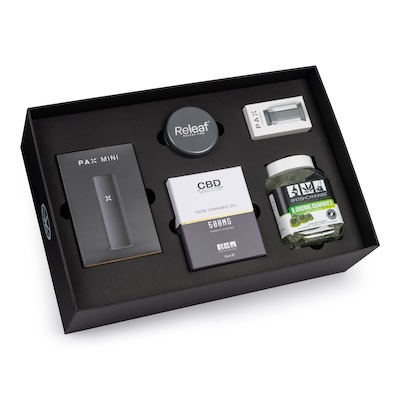
If you’re eligible to receive a medical cannabis prescription, you may be administered it as an oil, capsule, pastille, dried flower (for use with a vaporiser) or THC vape.
Finding the right format of medical cannabis for you will vary depending on factors like your symptoms, lifestyle and current medical history.
This is why your specialist will need to work with you to help you understand the different types of medical cannabis strains and formats that are available.
While they will always do what they can to take your personal preferences into account, some formats may not be recommended for your specific symptoms.
For instance, it’s illegal in the UK to smoke medical cannabis. So, if you’re prescribed dried flower, this is only ever designed to be taken with a vaporiser.
Am I eligible for UK medical cannabis treatment for bile salt malabsorption?
If you’ve been diagnosed with bile salt malabsorption, and you’re finding that conventional treatments aren’t helping to alleviate your symptoms, you may be eligible to receive a medical cannabis prescription.
However, you will need to meet strict eligibility criteria and be approved by our world-class clinical team to receive a prescription.
Here’s a brief look at the main criteria you’ll need to meet to qualify for treatment with us at Releaf, the most trusted UK medical cannabis clinic:
|
Eligibility criteria |
Further details |
|
Bile salt malabsorption diagnosis |
You will have to have been diagnosed with bile salt malabsorption by a doctor or specialist |
|
Previous treatment use |
You will have to have tried at least two conventional treatments that have failed to provide adequate relief for your symptoms, or caused unwanted side effects |
|
Pregnancy and breastfeeding |
You will not be eligible for a medical cannabis prescription if you are either pregnant or breastfeeding |
|
Other diagnoses (such as bipolar, psychosis or schizophrenia) |
You will not be eligible for a medical cannabis prescription if you have been diagnosed with psychosis, bipolar or schizophrenia |
|
Detailed medical history |
A full review of your existing medical history will be required before your initial consultation |
Even if you meet all of the criteria, our team always assesses eligibility on an individual basis to ensure that medical cannabis is the right fit for you.
The easiest way to get started with the process is by either contacting us to book a consultation, or using our medical cannabis eligibility checker.
After answering a few simple questions about yourself and your condition, we’ll be able to see whether a medical cannabis prescription may be suitable to help alleviate your symptoms.
FAQs on medical cannabis for bile salt malabsorption
If you still have questions about medical cannabis and bile salt malabsorption, we hear you. There’s a lot of information out there, so we’re here to do all we can to offer all the support you need.
Will medical cannabis slow my diarrhoea?
For some people, a medical cannabis prescription may help to slow your gut and ease symptoms of urgency. This can then have a knock-on effect on how often you need to visit the toilet, by alleviating the diarrhoea process.
But it’s important to note that individual responses vary. So what may work for one patient might not for another.
There is also limited evidence on medical cannabis and diarrhoea specifically, so you should always speak to a medical professional if you’re ever unsure.
Can medical cannabis be prescribed alongside colestyramine?
In most cases, medical cannabis can be administered as an adjunctive treatment to be taken alongside other conventional options, including colestyramine. Where it should never be used is as a direct replacement.
Colestyramine can also affect how other medications are absorbed and work inside the body, so it’s important to speak to a specialist before adding a medical cannabis prescription to your wider treatment plan.
They’ll be able to advise you on any potential medical interactions between the two and provide you with an appropriate dosing schedule to work alongside your other bile salt malabsorption treatments.
Can medical cannabis help with the anxiety of unpredictable BSM urgency?
Certain studies have demonstrated how medical cannabis can relieve symptoms like anxiety, as well as common related issues like depression and insomnia.
This is especially relevant to patients with bile salt malabsorption, as living with an unpredictable bowel and increased likelihood of diarrhoeal accidents can result in increased feelings of anxiety and, in some cases, even social withdrawal.
But every patient is different, so it’s important to seek tailored advice.
Does medical cannabis work differently for IBS than for bile salt malabsorption?
There’s a lot of overlap between IBS and bile salt malabsorption, particularly in terms of the symptoms they both cause. But the underlying causes are entirely different.
IBS is often caused by abnormal muscular contractions in the gut, hypersensitive nerves or an imbalance of certain gut bacteria.
Bile salt malabsorption, on the other hand, is caused by a build-up of bile acid in the large colon.
Having a medical cannabis prescription may help ease the symptoms that IBS and bile salt malabsorption share, such as abdominal pain, cramping and urgency. But it won't treat the underlying cause of either condition.
Releaf - let’s rethink healthcare