- Adult-Onset Still’s Disease (AOSD)
- Arthritis
- Ankylosing Spondylitis
- Bronchiectasis
- Chronic Obstructive Pulmonary Disease
- Chronic Skin Conditions
- Cluster Headache
- Complex Regional Pain Syndrome
- Eczema
- Ehlers Danlos Syndrome
- Endometriosis
- Fibromyalgia
- Gout
- Headaches
- HIV
- Long Covid
- Lower Back Pain
- Lupus
- Mast Cell Activation Syndrome (MCAS)
- Migraines
- Mixed Connective Tissue Disease
- Myalgic Encephalomyelitis

Medical cannabis treatments for stroke related pain
Pain after experiencing a stroke is quite a common issue, affecting more than half of all stroke survivors at some point during their recovery. This can be both chronic pain and acute pain, and often stems from a combination of causes, including damage to neurological pathways, stiffness, joint strain, and actual nerve damage.
While it can affect any part of the body, the majority of stroke pain issues focus around the shoulder region. While conventional treatment options are available, they do not always offer patients enough pain relief, which is where medical cannabis may be able to play a role.
While not a cure for stroke pain, medical cannabis treatment may be able to help reduce the impact of the pain, along with helping some of the co-occuring symptoms such as sleep issues and the mental health toll that often accompany chronic pain disorders.
1.3 million
stroke survivors live in the UK right now
100,000
people in the UK suffer from a stroke each year
50%
of stroke survivors battle stroke-related pain at some point in their post-stroke lifetime
79%
of randomised controlled trials featured in a 2025 review of the related literature found a statistically significant reduction in neuropathic pain after cannabinoid treatment.
Symptoms
Allodynia (pain from non-painful stimuli such as clothing or light touch)
Burning, aching, or stabbing pain, often on the affected side of the body
Depression and anxiety linked to chronic pain and life after stroke
Electric shock sensations
Fatigue tied to poor sleep and chronic pain
Headaches
Shoulder pain on the affected side
Sleep disruption
Spasticity-related musculoskeletal pain
Temperature changes in the affected area, including burning heat or extreme cold sensations
If you’re experiencing any of these symptoms, it’s important to seek tailored advice from a medical professional.
Treatment options:
If you have stroke related pain, there are several treatment options available to help relieve symptoms during a flare-up and prevent further potential flares. These include:
Amitriptyline and other tricyclic antidepressants
Duloxetine and other SNRIs
Gabapentin
Ketamine infusions
Lamotrigine
Opioid analgesics
Physiotherapy for spasticity-related pain
Pregabalin
Prescribed medical cannabis treatment
Repetitive transcranial magnetic stimulation (rTMS)
Transcranial direct current stimulation (tDCS)
Join our growing community of over 240,000 people
Whether you’re new to cannabis-based medicines, switching from another medical cannabis clinic, or self-medicating, we’ll put you back in control of your health.
A word from our specialist
“Unfortunately, stroke-related pain is not only a very common aftereffect for many stroke patients, but also quite debilitating. Alongside this, conventional pain relief options often do not offer patients the level of symptom control they need to live full, happy lives.
Medical cannabis will not cure stroke-related pain, but there is a growing body of both clinical and anecdotal evidence that THC and CBD may help to control neuropathic pain, along with the sleep and mental health issues that can often accompany such pain issues.”

Dr Oladotun Abidakun
Neurologist
Articles on Stroke related pain
Can medical cannabis treatments help the symptoms of stroke related pain?
Medical cannabis will not cure stroke related pain, but emerging clinical and anecdotal evidence is showing that it may be an alternative treatment option for patients who have not found the relief they need from conventional routes.
Both chronic and acute pain can occur after experiencing a stroke, often stemming from joint strain, muscle stiffness, damage to the brain’s pain-processing pathways and nerve damage (neuropathic pain, which medical cannabis is frequently prescribed for).
Although stroke-related pain can impact any part of the body, it is most commonly felt in the shoulder and surrounding tissues.
What symptoms does stroke-related pain cause?
Stroke-related pain can cause a number of uncomfortable symptoms, including shoulder, joint and hand pain, pain down the whole side of the body and headaches. Pain can be felt as a ‘pins and needles’ sensation, aching, burning, numbness and tingling, and can be worsened by movement, temperature changes and even light touch.
Headaches can be both tension headaches and/or migraines, characterised by intense throbbing or pounding pain, nausea and sensory sensitivity. Some people also find that their brain and muscles start to miscommunicate post-stroke, which can lead to painful muscle spasms and, if untreated, can result in permanently shortened muscles.
What treatments are currently available for stroke-related pain?
Over-the-counter painkillers are generally recommended as the first treatment, but these are often ineffective for managing stroke-related pain. Some doctors may prescribe medications such as amitriptyline or gabapentin, which work by significantly altering brain chemistry (albeit through entirely different mechanisms). These drugs are designed to change how the nervous system communicates, impacting cognitive function, pain signalling and mood.
It is also possible to obtain medical cannabis for stroke-related pain. Symptoms that may be addressed by medical cannabis include headaches, nausea, pain, anxiety and sleep issues.
Can medical cannabis treatment help with my stroke-related pain symptoms?
Medical cannabis may help with stroke-related pain, particularly central stroke-related nerve pain. There has been extensive research into the use of cannabinoids to treat and manage neuropathic pain conditions, with generally positive results.
Cannabis has also been found to potentially reduce inflammation, relax muscles, support sleep and help to regulate mood.
How does the endocannabinoid system relate to stroke-related pain?
The endocannabinoid system plays quite an integral role in stroke-related pain through its role in modulating pain transmission, reducing neuroinflammation and repairing neural pathways.
As stroke-related pain is largely a neuropathic pain issue, CB1 receptors found in abundance in the central nervous system and brain are of particular interest. When activated (either by endocannabinoid or cannabinoids from medical cannabis), these receptors can help to inhibit pain signals, as well as the emotional aspect of processing pain, and promote the brain’s natural ability to repair.
The endocannabinoid system is also heavily involved in regulating post-stroke neuroinflammation, which can be a cause of pain. This process is more related to the activation of CB2 receptors, located throughout the immune system and peripheral tissues, which, when activated, can help to regulate the inflammatory response and lower hypersensitivity.
Study name | Date of publication | Findings overview |
The Effects of Cannabinoids on Ischemic Stroke-Associated Neuroinflammation: A Systematic Review | 2025 | Cannabinoids showed remarkable effects against ischemic stroke-induced neuroinflammation in animal models through selective and non-selective activation/inhibition of endocannabinoid receptors. |
| The endocannabinoid system in pain and inflammation: Its relevance to rheumatic disease | 2017 | The endocannabinoid system and cannabinoids play an important role in inflammation and pain. Cannabis-based medications which enhance endocannabinoid function may represent a novel therapeutic solution to disorders associated with chronic pain. |
2015 | The endocannabinoid system is now known to be one of the key endogenous systems regulating pain sensation, with modulatory actions at all stages of pain processing pathways. |
What does the research say about cannabis and stroke-related pain?
In the 2025 review “The Use of Cannabinoids in the Treatment of Peripheral Neuropathy and Neuropathic Pain: A Systematic Review”, 13 out of 14 randomised control trials (79%) observed a statistically significant decrease in neuropathic pain score following treatment with a cannabinoid.
There are many studies looking at the therapeutic potential of cannabinoids for neuropathic pain, including one published in 2021 titled “Tetrahydrocannabinol and cannabidiol as an oromucosal spray in a 1:1 ratio: a therapeutic option for patients with central post-stroke pain syndrome?” In this report, a 61-year-old woman who developed shooting pain in the face and burning, tingling pain in the leg post-stroke was given an oral spray with a 1:1 THC and CBD ratio to take. She had previously tried over 3 years of therapy with amitriptyline, gabapentin, pregabalin and various grade II and III opioids that she found to be ineffective or have intolerable side effects. After administering the spray (6 sprays daily), her pain and quality of life improved ‘quickly and permanently’.
THC and CBD are two key cannabinoids to be considered for the treatment of stroke-related pain, and there is plenty of evidence to suggest that they are most effective for this condition when used together. THC largely acts on CB1 receptors, but also CB2 receptors to a lesser degree. Studies have shown that when the CB1 receptors are activated either by THC or endocannabinoids, this can help to inhibit pain signals.
CBD, on the other hand, binds to CB2 receptors and inhibits the enzyme which ordinarily breaks down endocannabinoids. This leads to higher levels of endocannabinoids in the body and an increased activation of CB1 and CB2 receptors. In supporting the activation of CB2 receptors, CBD has been shown to exhibit anti-inflammatory effects, which could help reduce neuroinflammation in stroke-related pain.
Research from the Lambert Initiative, University of Sydney, found that THC and CBD administered together reduced neuropathic pain with 100-fold greater efficacy than predicted. The study also noted that “THC also synergistically enhanced the efficacy of current first-line neuropathic pain treatments, gabapentin and duloxetine.”
Study name | Date of publication | Findings overview |
2025 | 13 out of 14 randomised control trials (79%) observed a statistically significant decrease in neuropathic pain score following treatment with a cannabinoid. | |
2021 | After administering the cannabinoid oral spray with a 1:1 ratio of THC and CBD, the case study’s stroke-related pain and quality of life improved ‘quickly and permanently’. | |
Cannabis constituent synergy in a mouse neuropathic pain model | 2017 | THC and CBD are highly effective at reducing neuropathic pain when administered together. THC also synergistically enhanced the efficacy of current first-line neuropathic pain treatments gabapentin and duloxetine. |
What forms of Releaf medical cannabis can be prescribed for stroke-related pain?
It is possible to access a prescription for a 1:1 ratio of THC and CBD oil from Releaf if you have previously tried at least two standard treatments.
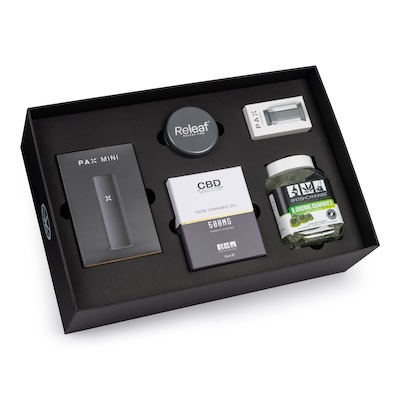
Your Releaf clinician will be able to advise you on the best medical cannabis products for your needs, from medical cannabis oil and medical cannabis strains, to THC vapes and medical cannabis pastilles.
Am I eligible for UK medical cannabis treatment for stroke-related pain?
If you’d like to try medical cannabis for stroke-related pain, you can check your eligibility by heading to our online medical cannabis eligibility checker.
FAQs on medical cannabis for stroke-related pain
I take warfarin or another anticoagulant after my stroke. Can I still be considered for medical cannabis treatment?
One of the things that is important to understand about getting a legal medical cannabis prescription is that your clinician will always be able to advise you on any contraindications or medicine interactions. Your Releaf clinician will have access to your medical records when you book a consultation and will discuss all options with you.
Can medical cannabis help with the burning pain on my affected side after stroke?
It’s possible that burning pain experienced after a stroke might be a form of neuropathic pain. Evidence suggests that cannabinoids, present in medical cannabis, and their interaction with the endocannabinoid system may be able to help reduce the impact of this type of pain.
Does medical cannabis interact with stroke medications, including anticoagulants?
Medical cannabis does interact with certain medications. Your Releaf clinician will be able to advise you on any potential medicine interactions or concerns at your consultation.
Can medical cannabis help with my stroke recovery?
Although research is ongoing, so far, studies indicate that cannabinoids found in medical cannabis may be able to serve as an alternative treatment to support stroke recovery.
Can medical cannabis help with post-stroke depression alongside the pain?
Medical cannabis is frequently prescribed for mental health issues, including depression and anxiety. It is possible that medical cannabis may help with this condition when used as directed, in the appropriate dose.
Which medical cannabis formats tend to work best for stroke-related pain?
The types of Releaf medical cannabis you may be prescribed depend on your symptoms and the advice from your prescribing specialist. What works for one patient doesn't always work in the same way for the next, and so there may be a need for changes to dose, formulation, or treatment type during your first few months of treatment.